
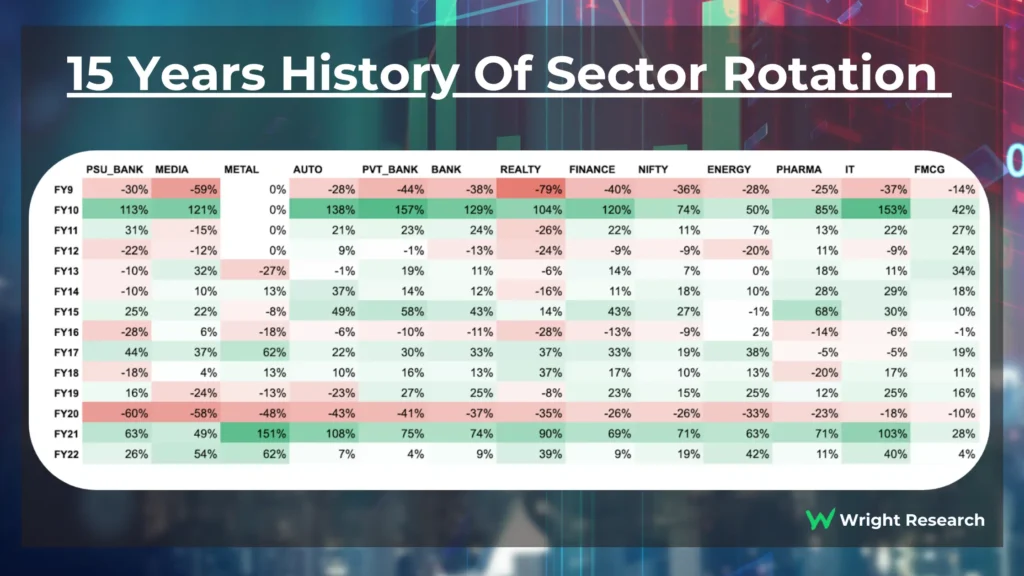
The Indian stock market is constantly shaped by a dynamic process known as sectoral rotation—the movement of investor money from one sector to another based on economic trends, global cues, valuations, liquidity conditions, and future growth potential. Sectoral rotation is one of the most powerful forces behind market ups and downs. It explains why some sectors suddenly rally even when the overall market appears weak, and why others underperform despite strong fundamentals.
In the current environment, marked by global uncertainty, fluctuating interest rates, mixed corporate earnings, and evolving domestic demand patterns, sectoral rotation has become even more pronounced. Investors—both institutional and retail—are carefully repositioning themselves, leaving behind sectors facing headwinds and reallocating toward those that promise resilience, structural growth, or attractive valuations.
Understanding which sectors are “hot” and which are “cooling off” can help investors identify opportunities early, avoid potential pitfalls, and build a portfolio aligned with ongoing market cycles. This article explores the current sectoral trends in India, the reasons behind these rotations, and what investors should be watching in the months ahead.
Why Sectoral Rotation Happens
Sectoral rotation is not random. It follows macroeconomic signals, corporate earnings cycles, and shifts in liquidity. The main reasons include:
1. Economic Growth Cycles
When the economy expands, certain sectors—like banking, manufacturing, and infrastructure—benefit. During slowdowns, defensive sectors—like FMCG, pharma, and utilities—attract money.
2. Global Cues and Commodity Prices
Global interest rates, inflation trends, and commodity prices heavily influence sectors such as metals, oil & gas, and IT.
3. Valuation Resets
When a sector becomes overvalued, investors book profits and move to underpriced sectors.
4. Technological and Policy Shifts
Themes such as digital transformation, renewable energy, PLI schemes, and electric mobility can drive rotation toward sunrise sectors.
5. Changing Consumer Behaviour
Consumption-driven sectors may gain momentum during stable income periods, while discretionary sectors may cool down during inflationary times.
Sectors Currently Hot in the Market
1. Information Technology (IT)
The IT sector, which had previously seen consolidation, is back in favour as global outsourcing demand stabilizes and fears of an AI bubble globally push investors toward established tech service providers. Indian IT companies like TCS, Infosys, HCL Tech, and LTIMindtree are benefiting from strong deal pipelines, stable margins, and global diversification.
Why it’s hot:
- Improved global risk sentiment
- Weakening U.S. dollar supports billing
- Defensive and stable earnings profile
- Strong participation from FIIs
2. Banking and Financial Services
The BFSI sector remains one of the strongest pillars of the Indian market. Private banks, PSU banks, NBFCs, and fintech players have showcased solid growth and improving asset quality. As the economy grows, credit demand expands, benefiting lenders.
Drivers:
- Healthy loan growth
- Controlled NPAs
- Strong domestic flows
- Rising digital financial adoption
Large banks and select NBFCs are preferred by both FIIs and DIIs due to their stability and multi-year expansion potential.
3. Infrastructure and Capital Goods
Government-led capital expenditure has kept the infrastructure and capital goods sector buzzing. Companies involved in construction, engineering, power, and railways have seen strong order books and improving operating leverage.
Why investors are bullish:
- Government’s infrastructure push
- PLI incentives
- Rising private capex
- Strong order book visibility
These sectors are also benefiting from long-term themes such as urbanization, logistics modernization, and industrial manufacturing revival.
4. Auto and Auto Ancillaries
The auto sector is witnessing a robust upswing due to strong festival-season demand, increased affordability, and a structural shift toward EVs and hybrid technologies.
Hot segments:
- Passenger vehicles
- Two-wheelers (recovery post rural revival)
- EV component manufacturers
Additionally, easing semiconductor shortages have improved production levels, supporting overall volumes.
5. Defence and Aerospace
One of India’s strongest emerging themes, defence stocks, continues to stay in focus. Companies like HAL, BEL, and Bharat Dynamics have benefitted from Make-in-India, export orders, and large domestic procurement plans.
Reasons for outperformance:
- Strong government orders
- Increased indigenisation
- Global demand for defence exports
- FII/retail participation increasing
Sectors Cooling Off
1. Metals and Mining
The metals sector, which had enjoyed a massive rally due to commodity price surges, is currently cooling because of weakening global demand, economic slowdown concerns in China, and softening metal prices.
Key challenges:
- Lower global steel/aluminium demand
- Weakness in China’s construction sector
- Volatile raw material prices
- Margin pressure
Though long-term structural themes remain, short-term volatility is discouraging heavy investment.
2. Realty
After a strong two-year run driven by luxury housing demand and Post-COVID property upcycles, the real estate sector is showing signs of fatigue. Profit booking has been visible as valuations have become stretched.
Cooling factors:
- High interest rates affecting affordability
- Input cost pressure
- Excessive optimism priced in
Midcap and smallcap realty stocks have been particularly volatile.
3. FMCG
The FMCG sector, typically a defensive favourite, is underperforming due to rural slowdown, inflationary pressures on packaged goods, and stretched valuations relative to expected growth.
Why it’s cooling:
- Slower rural recovery
- Input cost volatility
- Weak volume growth
- Money flowing to higher-growth sectors
FMCG remains safe for long-term investors but is currently losing short-term interest.
4. Pharma
The pharmaceutical sector has been facing price erosion in the U.S. generics market, regulatory challenges, and muted earnings growth. Despite occasional spikes, sustained outperformance has been limited.
Reasons:
- Regulatory warnings
- Competition in generics
- Margin pressure
- Moderate domestic growth
While the sector may recover long-term, near-term sentiment has been lukewarm.
5. Oil & Gas / PSU Energy
After impressive rallies in 2022–2023, several oil & gas and energy PSUs are now consolidating. Profit-taking, valuation concerns, and volatile crude prices have discouraged new flows.
Key negatives:
- Heavy FII selling during volatility
- Dependence on geopolitical events
- Policy uncertainty in fuel price regulations
What Drives Investors to Switch Sectors?
A combination of factors triggers sharp money rotation across sectors:
1. Global Economic Trends
If global risk appetite rises, FIIs tend to favour IT, private banks, and large caps. When risk-off sentiment prevails, money flows into FMCG, pharma, and utilities.
2. Interest Rate Movements
Rising interest rates harm rate-sensitive sectors like real estate and NBFCs but boost banking margins in the short term.
3. Inflation Cycles
High inflation hurts consumption and FMCG but supports sectors like commodities until demand weakens.
4. Currency Movement
A weaker rupee often boosts export sectors like IT and pharmaceuticals.
5. Government Policies
Sectors like defence, infrastructure, and renewables react quickly to policy announcements and budget allocations.
How Investors Can Use Sectoral Rotation for Better Returns
Understanding sectoral cycles can significantly improve investment outcomes. Here’s how:
1. Diversify but Tilt Toward Strong Sectors
A diversified portfolio protects against downturns. However, smart investors also allocate more to sectors gaining momentum.
2. Track FII–DII Flow Trends
Foreign institutional investors often drive moves in large-cap sectors, while domestic investors influence midcaps and smallcaps.
3. Watch Economic Indicators
Inflation, GDP growth, interest rates, and global demand patterns offer insights into upcoming sector rotations.
4. Monitor Relative Strength Index (RSI) Across Sectors
Technical indicators can signal when a sector is beginning to outperform.
5. Avoid Chasing Overheated Sectors
High valuations and excessive speculation often precede sharp corrections.
Conclusion
The Indian share market is in the midst of an active sectoral rotation, shaped by global cues, domestic economic factors, and valuation realignments. While sectors like IT, banking, infrastructure, auto, and defence are attracting strong investor interest, areas such as metals, realty, FMCG, pharma, and oil & gas are witnessing cooling sentiment.
Understanding these rotations helps investors position their portfolios more effectively, capture emerging opportunities early, and avoid sectors facing near-term headwinds. In a market driven increasingly by both global trends and domestic liquidity, keeping track of sector cycles is essential for long-term success.