
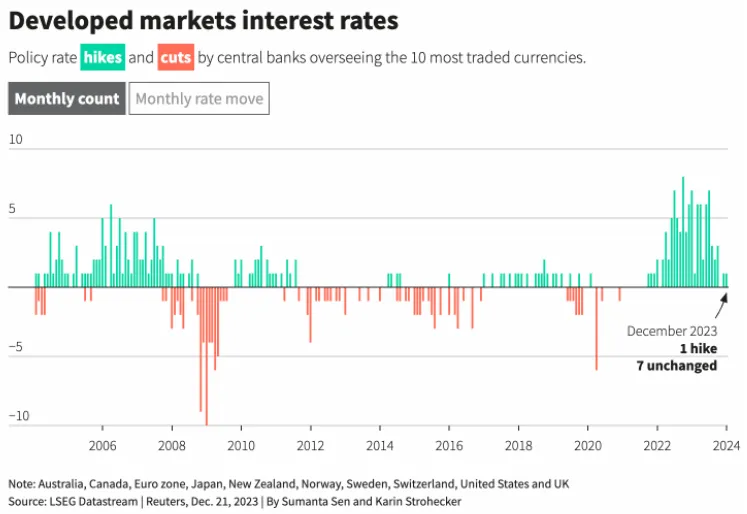
The financial markets of India have become increasingly sensitive to decisions by the Federal Reserve System (Fed) in the United States and broader global cues. The reason is straightforward: in our interconnected world, the monetary-policy stance of the U.S., moves in the U.S. dollar, and global risk-sentiment swings all ripple into emerging markets like India. Academic studies confirm the point — tighter U.S. monetary policy has a significant negative spillover effect on emerging-market output and asset-prices.
For India, the mechanism works through several channels: foreign portfolio investment flows (FPIs), the currency (rupee vs. dollar), global “risk-on / risk-off” sentiment, and the cost of global borrowing. When U.S. rates rise, yield on U.S. Treasuries becomes more attractive, the dollar tends to strengthen, and capital can shift away from relatively riskier emerging markets like India. Conversely, when the Fed eases or signals lower rates ahead, emerging markets may benefit from increased capital flows, weaker dollar headwinds, and improved investor sentiment.
Why U.S. rate policy matters for India
1. Capital-flow channel.
When U.S. interest rates are low, global investors may seek higher returns in emerging markets such as India. They borrow or invest where yields are higher and growth prospects stronger. One article explains how low U.S. rates make borrowing cheaper for foreign investors and make India more attractive.
By contrast, when the Fed hikes rates, U.S. assets become relatively safer and higher-yielding, prompting capital outflows from emerging markets. In India’s context, that means FPIs may reduce equity purchases or even sell holdings — putting pressure on Indian stock markets.
2. Currency / rupee impact.
Higher U.S. rates generally strengthen the U.S. dollar. A stronger dollar means the Indian rupee may depreciate. A weakening rupee can hurt foreign investor returns when converted back into dollars, thus reducing attractiveness of Indian equities.
A more volatile currency also raises worries about imports (especially commodities) or inflation and may impact the broader economy. On the flip side, when U.S. rates are cut and dollar weakness emerges, the rupee may strengthen, improving the denominator for foreign returns and enhancing attractiveness.
3. Domestic monetary policy space & borrowing cost.
When U.S. rates are high, India may feel compelled to maintain relatively higher rates to defend the rupee or manage inflation and capital flows. That limits the flexibility of the Reserve Bank of India (RBI) to ease policy, which in turn affects growth, borrowing costs, and corporate profitability. When global rates ease, India has more room to cut rates (if inflation allows) thereby supporting equities.
In this sense, U.S. monetary policy indirectly constrains India’s rate decisions, especially in times of capital-flow stress.
4. Risk-sentiment and global growth cues.
Beyond interest rates, U.S. data (like employment, inflation), and global trade or geopolitical news heavily influence emerging markets. When U.S. growth is weak or inflation high, the risk of global slowdown rises — which tends to weigh on India’s cyclicals, exports and markets. Similarly, positive global news can drive “risk-on” flows into India.
For example, when the Fed cut rates by 25 bps in October 2025, Indian markets were expected to receive a boost because global liquidity improved and FPIs may relook at India.
Recent developments: The Fed’s 2025 rate cuts and Indian implications
In late October 2025 the Fed reduced its benchmark rate by 25 basis-points to 3.75-4.00 % from the prior range. While this was largely anticipated by markets, analysts pointed out that the relief wasn’t automatically transformative — the commentary by Fed Chair Jerome Powell underscored that further cuts were not a given, which tempered enthusiasm.
What does this mean for India? Analysts argue the following:
- With U.S. yields potentially peaking or being cut, attractiveness of U.S. assets drops, making emerging markets including India relatively more appealing. So fresh foreign-capital flows can support Indian equities, especially in sectors that attract global money.
- Lower U.S. rates reduce borrowing costs for global investors, thus improving risk appetite and encouraging “carry trades” into higher-growth markets.
- For the Indian rupee, weaker U.S. yields/dollar means less pressure, which may stabilise currency and improve investor confidence.
- For the RBI, a more benign global rate environment gives more policy space to ease domestically if inflation allows, which could boost domestic consumption/investment and equities.
However, the caveats are important: a 25 bps rate cut was largely discounted by markets in India, so the upside may already be priced in. Analysts caution that rate cuts are more of liquidity-tailwinds than a fix for weak earnings or growth.
Also, global risks such as U.S. inflation, geopolitical tensions, or a strong dollar reversal remain threats.
How Indian markets respond in practice
Historically, the response of Indian markets to U.S. monetary policy has been measurable. For instance, a ScienceDirect paper shows that U.S. monetary policy loosening or tightening has significant effects on India’s equity and output.
Practically speaking:
- When U.S. rates rose or dollar strength increased, Indian equities faced headwinds through FPI outflows, weaker rupee, and higher cost of finance for corporates with foreign debt.
- When U.S. rates are cut or expected to fall, Indian markets often register relief rallies, especially if domestic fundamentals are intact.
One concrete example: after the Fed’s October 2025 cut, Indian equity analysts noted the move could revitalise FPI flows into India and strengthen liquidity support, especially for financials and consumption sectors.
In one write-up it was pointed out: “The U.S. Fed rate cut will be net positive in the longer term even as it was largely discounted. … Lower U.S. yields will reduce the relative appeal of American bonds and some FII money will come to emerging markets like India.”
Sectoral and company-level implications
The impact of U.S. rate policy and global cues is not uniform across Indian sectors. Some of the key knock-on effects:
Financials & consumption
When global liquidity improves (via lower U.S. rates), interest-sensitive sectors such as banks and consumer-finance often benefit. In India, cheaper domestic borrowing (if RBI lowers rates) boosts demand and improves asset quality. Analysts specifically cited financials and consumption as likely beneficiaries of the recent Fed cut.
Exports / IT / global-earning firms
A stronger dollar and higher U.S. rates can hurt Indian export-oriented firms (IT) or companies with global earnings. When the dollar weakens (post-cut), the translation effect may improve earnings for global-earning Indian firms. Also, a weaker dollar tends to ease margin pressures for those with costs in foreign currency.
Hence, global cues matter for sectors exposed to U.S./global demand.
Cyclicals & commodities
Global rate cuts often improve risk appetite, lifting commodity prices and cyclicals; Indian firms in mining, metal, infrastructure may benefit. Conversely, a strong dollar and high U.S. rates often depress commodity prices and global demand, hurting these sectors.
Corporate-borrowings and debt servicing
Many Indian corporates borrow in foreign currency or have foreign-denominated exposure. High U.S. rates weaken the rupee and increase servicing cost for such firms. Lower U.S. rates therefore ease that burden and help corporate balance-sheets.
Key risks & caveats for India
While the connection between U.S. rate policy and Indian markets is strong, investors must factor in several caveats:
- Discounting by markets: Often markets anticipate U.S. policy moves well in advance. A rate cut that is largely expected may have limited upside surprise for Indian markets. As noted earlier, the October 2025 Fed cut was largely priced in.
- Domestic fundamentals still matter: Global liquidity helps, but if Indian corporate earnings, growth or domestic demand remain weak, the impact will be muted. As one analyst put it: “This is a liquidity tailwind, not a fundamentals reset.”
- Strong dollar / global downturn risk: If U.S. inflation remains sticky and Fed hikes again, or if global growth deteriorates sharply, emerging markets like India will remain vulnerable. A strong dollar can reverse flows and hurt rupee, compressing margins.
- Timing and magnitude: Even though a Fed cut or easing of global rates helps, the timing, speed and signalling matter. If the Fed sends a cautious message (as happened with Powell’s comments), the market may remain jittery.
- Policy translation and domestics: India’s policy space may still be constrained by inflation, fiscal deficits, or external vulnerabilities. The RBI cannot rely solely on global cues; domestic policy dynamics and inflation remain critical.
- Sectoral disparity: Not all sectors benefit equally. Liquidity themes may help financials and consumption, but export-oriented, commodity and stressed corporate segments may lag if global demand remains weak.
What investors should watch
Given this backdrop, Indian market participants should track the following to gauge how U.S. rate policy and global cues may affect India:
- Fed commentary and yield curves: Markets pay close attention to Fed meeting minutes, forward guidance, U.S. Treasury yield movements — especially the 10-year. A flattening or falling yield curve often signals easing, which helps India.
- Dollar strength/weakness and USD/INR: The U.S. dollar index, and specifically the rupee’s movement versus the dollar. Rupee weakness often means foreign-capital pressure and inflation risk.
- FPI flows: Net foreign institutional investor flows into Indian equities and debt. A sustained increase often signals positive global liquidity and appetite.
- Commodity prices and global demand indicators: As global growth slows or accelerates, India’s exports, commodity prices and corporate demand respond.
- Domestic monetary policy cues: Even if global liquidity improves, India benefits only if the RBI and government respond with favourable policies — e.g., rate cuts, liquidity support, improving demand.
- Earnings growth and sector-leadership: Improved global liquidity does not matter if domestic earnings are weak. Sectoral bottom-up themes matter.
- Geopolitical/trade developments: Global trade tensions (e.g., U.S. tariffs, China-U.S. standoffs) can overshadow pure rate moves. For India, these distortions matter significantly.
Conclusion
In sum, the monetary-policy stance of the U.S. and global cues are material for the Indian stock market. Low U.S. rates and weak dollar tend to favour Indian equities via increased foreign flows, stronger rupee, improved liquidity and enhanced risk appetite. Higher U.S. rates, a strong dollar, or hawkish global signals can reverse the flow and impose headwinds via capital outflows, rupee pressure, and higher cost of capital.
Nevertheless, investors should not treat global cues as the only guiding light. While U.S. rate policy sets an important backdrop, the real driver of Indian markets remains domestic fundamentals — earnings growth, consumer demand, policy support and sectoral momentum. In a world where global liquidity is less of a guarantee, selectivity, timing and disciplined risk management matter more than ever.
For participants in the Indian market today, it is wise to factor in how U.S. rates may evolve, how the dollar may behave, and how global risk-sentiment may shift — but equally, to keep a close eye on Indian corporate performance, flow data, and domestic policy signals. When the stars align—favourable global liquidity, strong domestic demand and positive policy initiatives—Indian markets may surf a wave. When they don’t, even robust global cues may not deliver a sustainable rally.